Skip to content
Engaze

Manufacturers and exporters

Your floor runs on paper and Tally. We build around both.

Production, stores, QC and dispatch in one system that reads like your registers, feeds your Tally, and tells the owner what is actually happening today.

  • Business systems
  • Custom software
  • IoT & hardware
  • AI that does the work
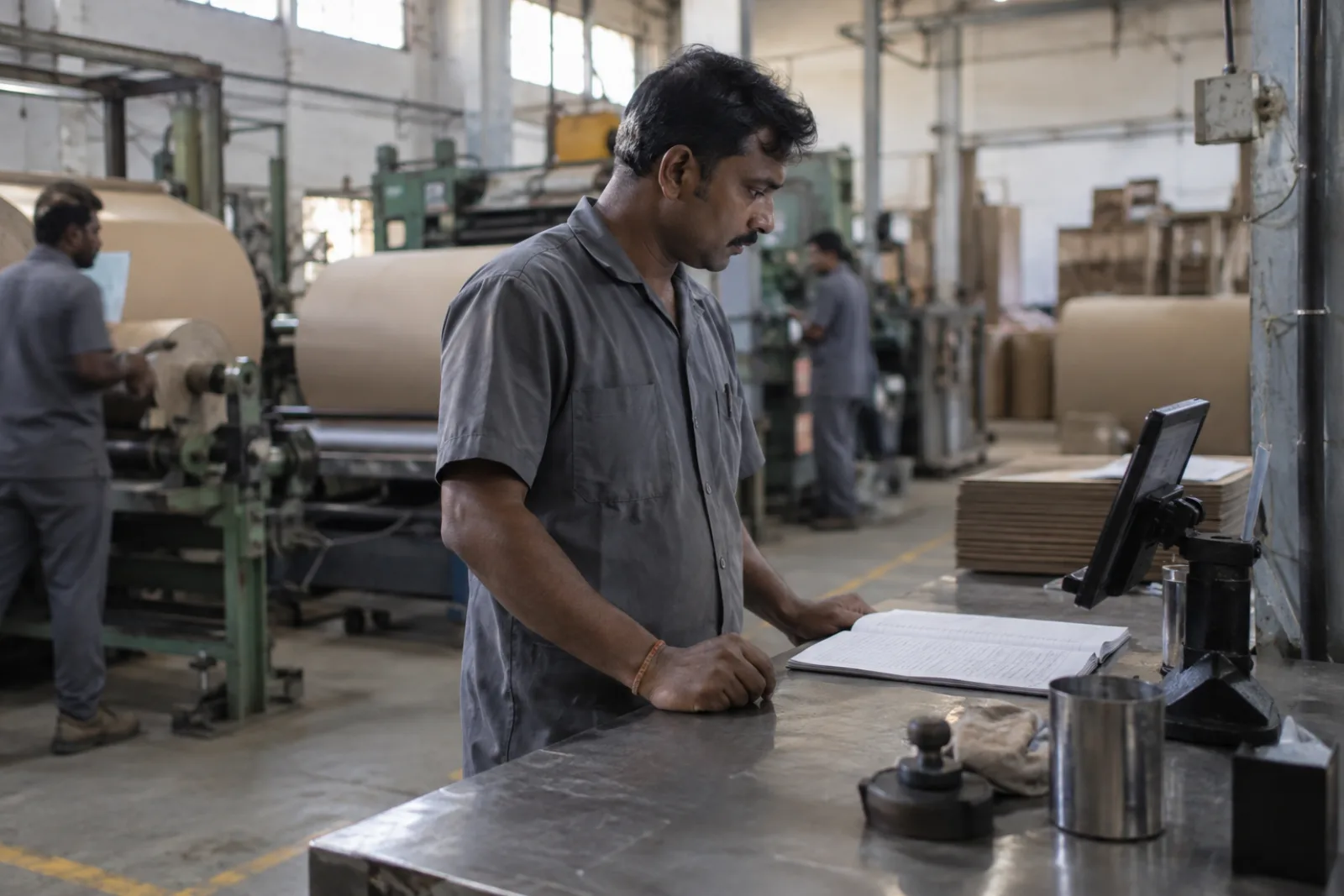
An operator at a steel workbench on a factory floor, checking a paper production register beside a tablet (illustrative photo)

What usually hurts

  • Log sheets are filled on the floor, then typed into Tally days later. By then the numbers are stale and the typing is where errors creep in.

  • Physical stock and book stock disagree, and nobody can say which batch went into which carton.

  • The owner's reports come from three people's spreadsheets, each slightly different.

  • Off-the-shelf ERPs want you to change how the floor works. The floor is not going to change.

The flow we build around

One order, start to finish

  1. Order

    Today

    A PO on WhatsApp, re-typed into a register.

    After

    Captured once; every step below links back to it.

  2. Plan

    Today

    A planning sheet the supervisor keeps in his head.

    After

    Jobs per machine per shift, with material checked before the job starts.

  3. Produce

    Today

    Paper log sheets per machine.

    After

    The same sheet on a tablet; batches and quantities traced as they happen.

  4. QC

    Today

    A register nobody opens until a complaint.

    After

    Checks at the stages you define, with holds that stop dispatch.

  5. Dispatch

    Today

    Cartons counted against memory.

    After

    Packed against the order; the packing list and invoice fall out.

  6. Books

    Today

    Tally, typed up later.

    After

    Tally stays the books. The system posts to it; nothing is typed twice.

What we typically build

  • Production logs

    Your paper log sheets, captured on the floor as they happen.

  • Stores & batches

    Raw material to finished goods, lot by lot, with physical stock that matches.

  • Planning

    Jobs per machine per shift; material shortages before the job, not during.

  • QC & holds

    Checks where you want them; a failed check stops the carton.

  • Dispatch & packing

    Packing lists and invoices from what was actually packed.

  • Tally connector

    Posts to your Tally. The accountant keeps working the way they do.

  • Owner's dashboard

    What ran, what is stuck, what ships today, on your phone.

  • Training videos

    Short per-screen videos so a new operator learns on day one.

What it looks like when it works

Real engagements, told by sector.

All the work
  • An export manufacturer

    Before: Paper + TallyAfter: One system

    from production to dispatch

    Production, stores, QC and dispatch ran on paper registers, with Tally as the books. We built one system shaped around that paper: log sheets captured on the floor, batches traced from raw material to carton, dispatch checked against the order. Tally stayed the books; the ERP feeds it. Releases ship every week.

    First working version: Within the first month

    Read the story

    Production, stores, QC and dispatch ran on paper registers, with Tally as the books. We built one system shaped around that paper: log sheets captured on the floor, batches traced from raw material to carton, dispatch checked against the order. Tally stayed the books; the ERP feeds it. Releases ship every week.

    First working version: Within the first month

  • The same manufacturer

    Before: Four months in TallyAfter: History in the ERP

    of work orders, April to August 2026

    Four months of Tally work orders (April to August 2026) were read into the ERP, so the new system started with history instead of an empty screen.

    Read the story

    Four months of Tally work orders (April to August 2026) were read into the ERP, so the new system started with history instead of an empty screen.

Security

Your data, where you can point at it.

Your production data never has to leave your premises. The system can run on a small server inside your factory, reachable only on your own Wi-Fi, with a nightly backup you hold.

  • Inside your office
  • In your own cloud account
  • Hosted by us

Inside your office, in your own cloud account, or hosted by us with hourly backups and a weekly restore test. Every ticket tracked until it is closed.

How we keep systems safe

What the first month usually ships

Week 1Weeks 2–3Week 4
  1. Week 1

    we walk the floor, photograph every register, and fix the scope.

  2. Weeks 2–3

    production logs, stores and dispatch land as working screens, on your data.

  3. Week 4

    QC, the owner's dashboard, Tally posting, training for the floor.

Questions

We already have Tally. Does this replace it?

No. Tally stays your books and your accountant's tool. The system records what happens on the floor and posts to Tally, so nothing is typed twice.

Our operators are not comfortable with computers.

The screens are built to look like the registers they already fill, on a tablet by the machine, with one keypad for numbers and short per-screen training videos. If a screen needs explaining, it is redesigned.

Can it run without internet?

Yes. It can run on a server inside your factory on your own network, and keep working when the connection drops.

What about machines and sensors?

When it is worth it, we read data straight from machines (counters, temperatures, run time) so the log fills itself. That is a second phase, after the paper is captured.

How a month works

A month here ships what used to take a quarter.

Method, pricing and terms

1 month

₹5,00,000

₹23,800

per working day

The MVP: a business system with a dozen or more modules on your data, in production.

One month is 21 working days, Monday to Friday. Prices are in INR and exclude taxes.

A real example and the day rate

A real example: A factory ERP: production logs, stores, QC, dispatch, Tally posting and the owner's dashboard.

That is the month divided by its 21 days. Compare it with the cost of the hours your own people spend on the work the system replaces.

Tell us what needs solving.

Three minutes, four questions. You will hear from Prerak himself, usually within a working day.

Start a project